<h2>Georgian House Style: The Art of Symmetry and Classical Design in Early America</h2><h2>Overview</h2>
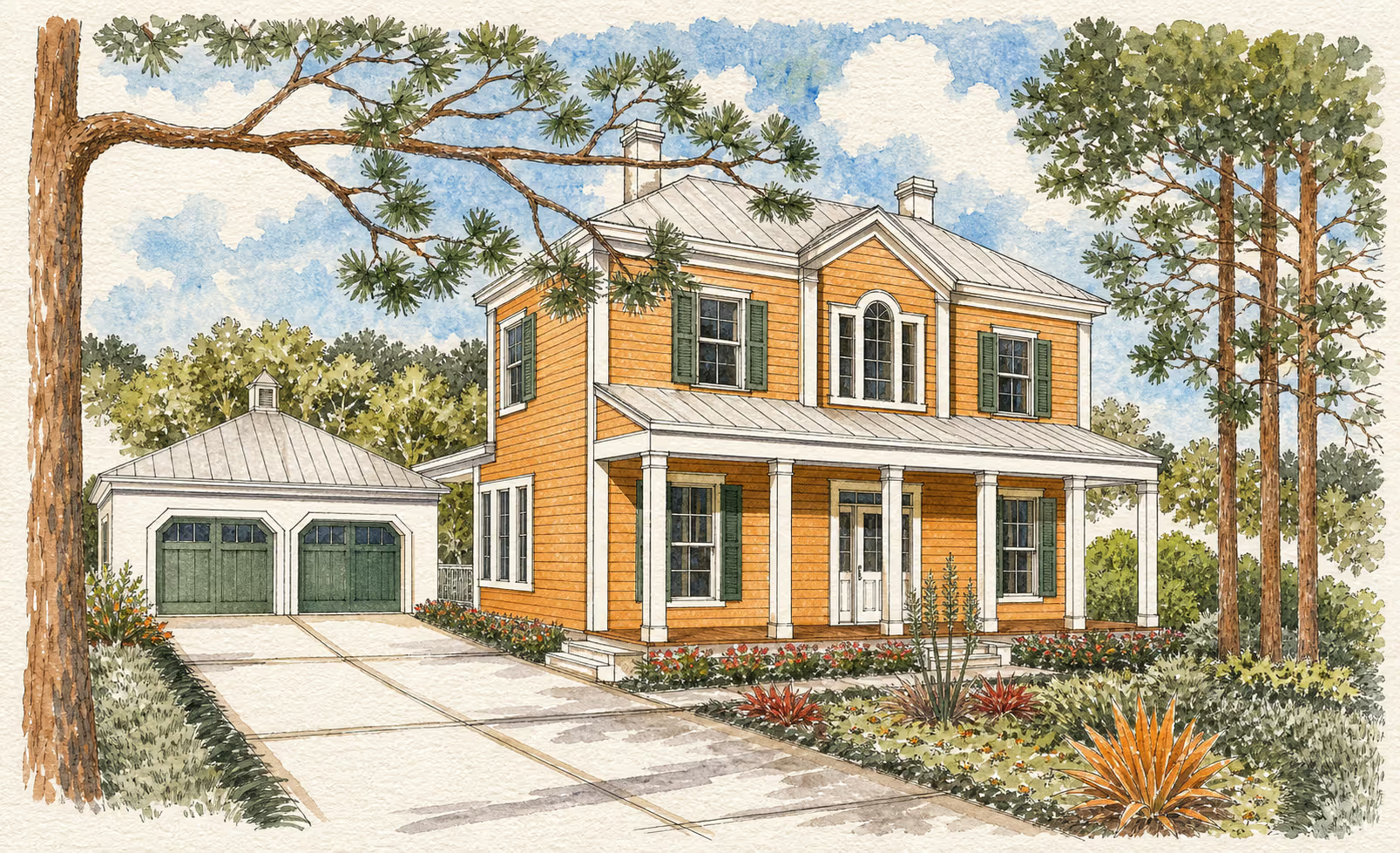
<p>Georgian homes are celebrated for their balanced proportions, symmetrical facades, and classical details. Typically constructed with brick (urban) or clapboard (rural) exteriors, Georgian houses feature gabled or hipped roofs, a central entry highlighted by columns or a decorative pediment, and evenly spaced, double-hung multi-pane sash windows. The style’s dignified, orderly appearance made it a favorite among wealthy colonists and continues to inspire new homes today.</p><h2>History</h2>
<p>The Georgian style originated in the early 18th century during the reigns of Britain’s King Georges I through IV. Drawing inspiration from Renaissance and Palladian ideals, Georgian architecture emphasized harmony, proportion, and classical motifs. The style became dominant in the American colonies from about 1700 to 1776, particularly along the eastern seaboard where English influence was strongest. After the American Revolution, the style evolved into the Federal (or Adam) style, but its influence remained strong. The late 19th and early 20th centuries saw a Georgian Revival, reaffirming its timeless status in American residential design.</p><h2>Defining Features</h2>
<ul>
<li><strong>Symmetrical Facade:</strong> Balanced arrangement of windows and doors, often five bays across.</li>
<li><strong>Central Entry:</strong> Main door is centered and highlighted by a decorative crown, pediment, or columns.</li>
<li><strong>Multi-Pane Windows:</strong> Double-hung sash windows with small panes, typically arranged evenly across the front.</li>
<li><strong>Brick or Clapboard Exteriors:</strong> Brick is common in urban areas, while clapboard appears in rural settings.</li>
<li><strong>Gabled or Hipped Roof:</strong> Roofs are simple and often feature decorative cornices.</li>
<li><strong>Center-Hall Floor Plan:</strong> Interior layout usually includes a central hallway with rooms on either side.</li>
</ul><h2>Unique Construction Methods</h2>
<p>Georgian homes were built using durable materials such as brick, stone, or wood, depending on regional availability. Masonry techniques ensured solid, long-lasting structures. Decorative elements like dentil molding, pilasters, and cornices were crafted with care, reflecting the era’s emphasis on craftsmanship and proportion. Kitchen wings were often added to manage heat and reduce fire risk, keeping cooking activities separate from main living spaces.</p><h2>Notable Examples</h2>
<ul>
<li><strong>Drayton Hall</strong> (Charleston, SC): A well-preserved example of Georgian architecture in the American South.</li>
<li><strong>Hammond-Harwood House</strong> (Annapolis, MD): Known for its symmetry and classical detailing.</li>
<li><strong>Isaac Royall House</strong> (Medford, MA): Showcases the style’s brick construction and balanced facade.</li>
</ul><h2>Revival and Enduring Appeal</h2>
<p>The Georgian Revival movement of the late 1800s and early 1900s brought renewed interest in the style, especially for public buildings and upscale homes. Today, Georgian-inspired houses remain popular for their timeless elegance, practical layouts, and association with tradition and stability. The style’s adaptability allows it to complement both historic neighborhoods and new residential developments.</p><h2>Interesting Facts</h2>
<ul>
<li>Georgian homes often included separate kitchen wings to manage heat and reduce fire risk.</li>
<li>To preserve strict symmetry, some Georgian homes included false windows or doors on the façade.</li>
<li>Georgian architecture influenced the later Federal and Colonial Revival styles in the United States.</li>
</ul><h2>Summary</h2>
<p>The Georgian house style is a lasting testament to the creative partnership between British tradition and American adaptation. Its roots in classical British architecture provided a foundation of symmetry and elegance, while American builders infused the style with practicality and regional character. The result is a uniquely transatlantic legacy—homes that are as functional as they are beautiful, and as relevant today as they were centuries ago. As we continue to admire and build Georgian-inspired homes, we celebrate a style that not only bridges continents and eras but also embodies the enduring values of craftsmanship, balance, and timeless appeal.</p>
How Our Plans Are Organized
Our plans are organized first by a Main Category (American, British, French, etc), and secondly by a Sub Style (Cape Code, Acadian, Low Country, etc).
You may use the filter tools on the Plan Search Page to narrow down your selections based on your preferred home style. Take note, that most plans can have their exterior elevations modified to a style of your choosing.