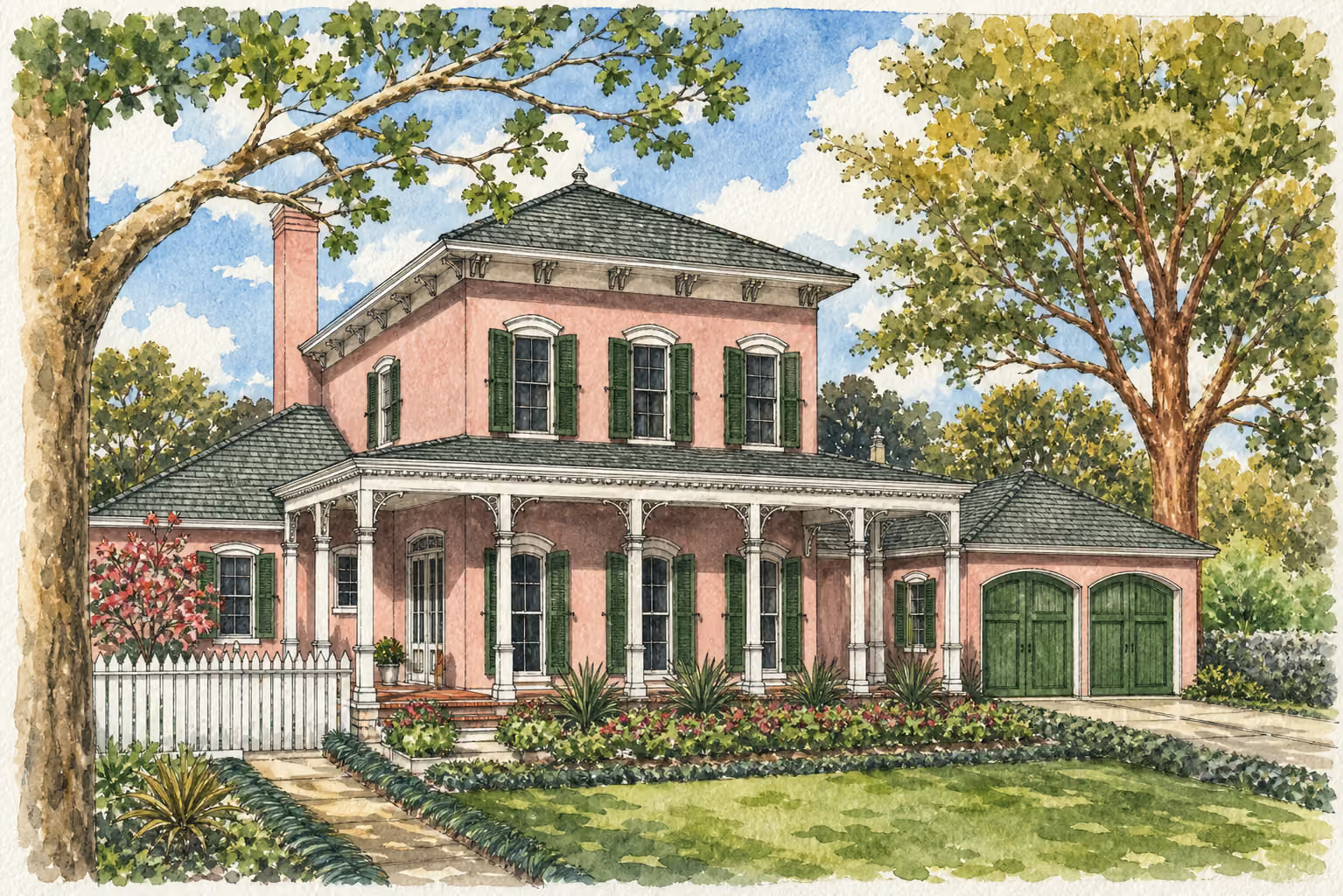
<h2> Italianate Homes Across America</h2><h2>Overview</h2>
<p>The Italianate house style, inspired by the rural villas of northern Italy and the Picturesque movement, emerged in the early-to-mid 19th century. It became a defining feature of both urban and rural landscapes in the United States and Britain, celebrated for its blend of elegance, practicality, and historical significance.</p><h2>History</h2>
<p>Italianate homes rose to popularity in the United States between 1840 and 1885, championed by architects Alexander Jackson Davis and Andrew Jackson Downing. Their designs and pattern books helped spread the style, which reflected a fascination with European culture and the Picturesque movement. The availability of mass-produced brackets and moldings made Italianate details accessible and affordable. Today, these homes remain prominent in historic districts and are sometimes adapted for modern use, especially in preservation-minded areas.</p><h2>Defining Features</h2>
<ul>
<li>Tall, narrow windows, often arched or curved at the top</li>
<li>Low-pitched or flat, hipped roofs with wide, overhanging eaves</li>
<li>Ornate brackets or corbels supporting the eaves</li>
<li>Heavily molded cornices</li>
<li>Decorative window crowns or hoods</li>
<li>Occasional towers or cupolas for vertical emphasis and ventilation</li>
</ul><h2>Construction Methods</h2>
<p>Italianate homes typically used wood framing, with decorative elements such as brackets, cornices, and moldings applied to the exterior. The industrial production of these details allowed for intricate ornamentation at a lower cost, making the style accessible to a broad range of homeowners.</p><h2>Notable Examples</h2>
<p>These houses remain a prominent part of the architectural heritage in cities and towns across the country.</p><h2>Revival and Modern Adaptations</h2>
<p>Although the Italianate style peaked in the 19th century, its influence persists in modern homes and restorations. The style’s adaptability and decorative appeal ensure its continued relevance, especially in neighborhoods that value historic character and variety.</p><h2>Interesting Facts</h2>
<ul>
<li>Mass-produced brackets and moldings made the style affordable and widespread.</li>
<li>Some Italianate homes feature towers or cupolas, sometimes used as lookouts or for ventilation in warm weather.</li>
</ul><p>The Italianate style’s widespread adoption in the 19th century was driven as much by advances in industrial manufacturing as by aesthetic preference. Mass-produced brackets, cornices, and moldings made it possible for homeowners of varying means to incorporate elaborate details once reserved for the wealthy.</p>
How Our Plans Are Organized
Our plans are organized first by a Main Category (American, British, French, etc), and secondly by a Sub Style (Cape Code, Acadian, Low Country, etc).
You may use the filter tools on the Plan Search Page to narrow down your selections based on your preferred home style. Take note, that most plans can have their exterior elevations modified to a style of your choosing.