<h2>French Creole House Style: Blending French, Spanish, African, and Native Traditions</h2><h2>Overview</h2>
<p>French Creole homes are a distinctive architectural tradition found in Louisiana and along the Gulf Coast. Developed in the 18th and 19th centuries by French and Spanish settlers, these houses blend European, Caribbean, African, and Native American building practices. The result is a style uniquely adapted to the subtropical climate and rooted in multicultural history.</p><h2>History</h2>
<p>The Creole style emerged as settlers in Louisiana combined their own traditions with those of enslaved Africans and local Native peoples. Early homes were designed to address the challenges of heat, humidity, and flooding. By the 1840s, Anglo-American influences began to appear, but the core Creole features remained. Today, historic Creole homes can be found in New Orleans’ French Quarter, rural plantations, and small towns throughout the region. The style has seen renewed interest in preservation and new construction, especially in neighborhoods that value historic character and regional authenticity.</p><h2>Defining Features</h2>
<ul>
<li><strong>Raised Basements or Piers:</strong> Homes are elevated above ground to protect from flooding and improve ventilation.</li>
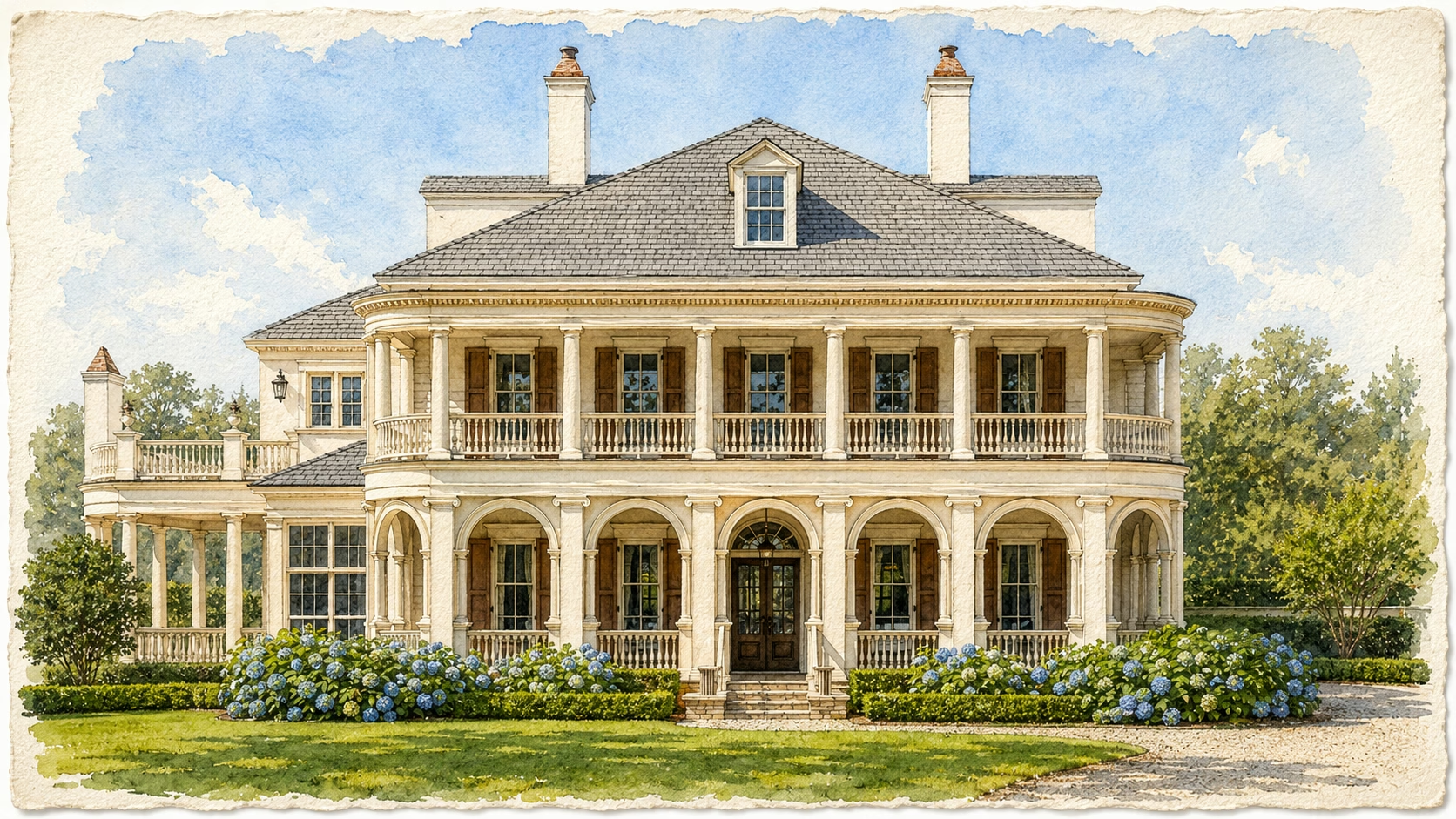
<li><strong>Broad Hipped or Gabled Roofs:</strong> Roofs extend well beyond the walls, providing shade and shelter from rain.</li>
<li><strong>Wraparound Galleries (Porches):</strong> Deep porches encircle the house, serving as outdoor living rooms and helping to cool the interior.</li>
<li><strong>French Doors:</strong> Tall, narrow doors open onto galleries, allowing for cross-ventilation and easy access to the outdoors.</li>
<li><strong>Heavy Cypress Frames with Bousillage Infill:</strong> Walls are often constructed with cypress timber and filled with bousillage—a mixture of mud, Spanish moss, and animal hair—providing insulation and resilience.</li>
<li><strong>Absence of Central Hall:</strong> Many Creole homes feature a large central room flanked by smaller side cabinets (storage rooms), with rooms often opening directly onto galleries rather than a formal hallway.</li>
</ul><h2>Unique Construction Methods</h2>
<p>Creole builders used local materials and techniques suited to the Gulf Coast environment. Raised piers kept homes dry during floods, while bousillage infill provided insulation against heat and humidity. Cypress wood, naturally resistant to rot and insects, was a preferred framing material. The galleries provided shade and served as social spaces for families and neighbors.</p><h2>Notable Examples</h2>
<ul>
<li><strong>Hebert House:</strong> Near Lake Arthur, Louisiana, this circa 1840 home features a steep gable roof, bousillage walls, and a traditional Creole floor plan.</li>
<li><strong>Millet House:</strong> In Gramercy, Louisiana, this 1830s Creole cottage showcases a high brick pier foundation and bousillage-filled walls.</li>
<li><strong>Ormond Plantation House:</strong> Built in 1789 in Destrehan, Louisiana, this plantation house exemplifies French Colonial style with wraparound galleries.</li>
<li><strong>Beauregard-Keyes House:</strong> In New Orleans’ French Quarter, this townhouse combines Creole and Greek Revival elements.</li>
</ul><h2>Revival and Enduring Appeal</h2>
<p>Creole architecture remains popular in historic districts and is often emulated in new homes seeking regional authenticity. The style’s practical features and cultural significance make it a favorite for those who appreciate both tradition and comfort.</p><h2>Interesting Facts</h2>
<ul>
<li>Bousillage, the mud, moss, and animal hair wall infill, is a hallmark of Creole construction and reflects the resourcefulness of early builders.</li>
<li>Galleries were designed as true outdoor living rooms, offering a cool retreat during hot Louisiana summers.</li>
<li>Some Creole homes feature brightly painted shutters and doors, adding color and personality to historic neighborhoods.</li>
</ul><h2>Summary</h2>
<p>French Creole homes invite us to slow down, savor the breeze, and celebrate the rich tapestry of cultures that make the Gulf Coast feel like home. Their wraparound galleries become gathering places and social hubs. Every detail, from the sturdy cypress beams to the colorful shutters, reflects a legacy of ingenuity and warmth. In these homes, history isn’t just preserved—it’s lived, breathed, and woven into the everyday rhythms of life along the Gulf Coast.</p>
How Our Plans Are Organized
Our plans are organized first by a Main Category (American, British, French, etc), and secondly by a Sub Style (Cape Code, Acadian, Low Country, etc).
You may use the filter tools on the Plan Search Page to narrow down your selections based on your preferred home style. Take note, that most plans can have their exterior elevations modified to a style of your choosing.