<h2>Greek Revival House Style: America’s Classical Statement</h2>
<p>Greek Revival architecture brought the grandeur of ancient Greece to American homes and civic buildings. Inspired by the temples of Athens, this style features bold columns, pediments, and a strong sense of symmetry. Greek Revival became a symbol of the young nation’s democratic ideals, offering a dignified yet practical approach to design.</p>
<h2>History</h2>
<p>The Greek Revival movement flourished in the United States from about 1825 to 1860. Its rise was fueled by admiration for Greek democracy and the country’s struggle for independence, which resonated with Americans after their own revolution. Pattern books and builders’ guides helped spread the style across the Eastern and Midwestern states, making it accessible to both urban and rural communities. Greek Revival became especially popular for government buildings, banks, churches, and plantation homes, becoming the first "National Style" in the United States for its widespread use in public and private buildings.</p>
<h2>Defining Features</h2>
<ul>
<li><strong>Symmetrical Facade:</strong> Balanced front elevation, often with a central entryway.</li>
<li><strong>Gable-Front Orientation:</strong> The roof’s triangular pediment faces the street, echoing Greek temples.</li>
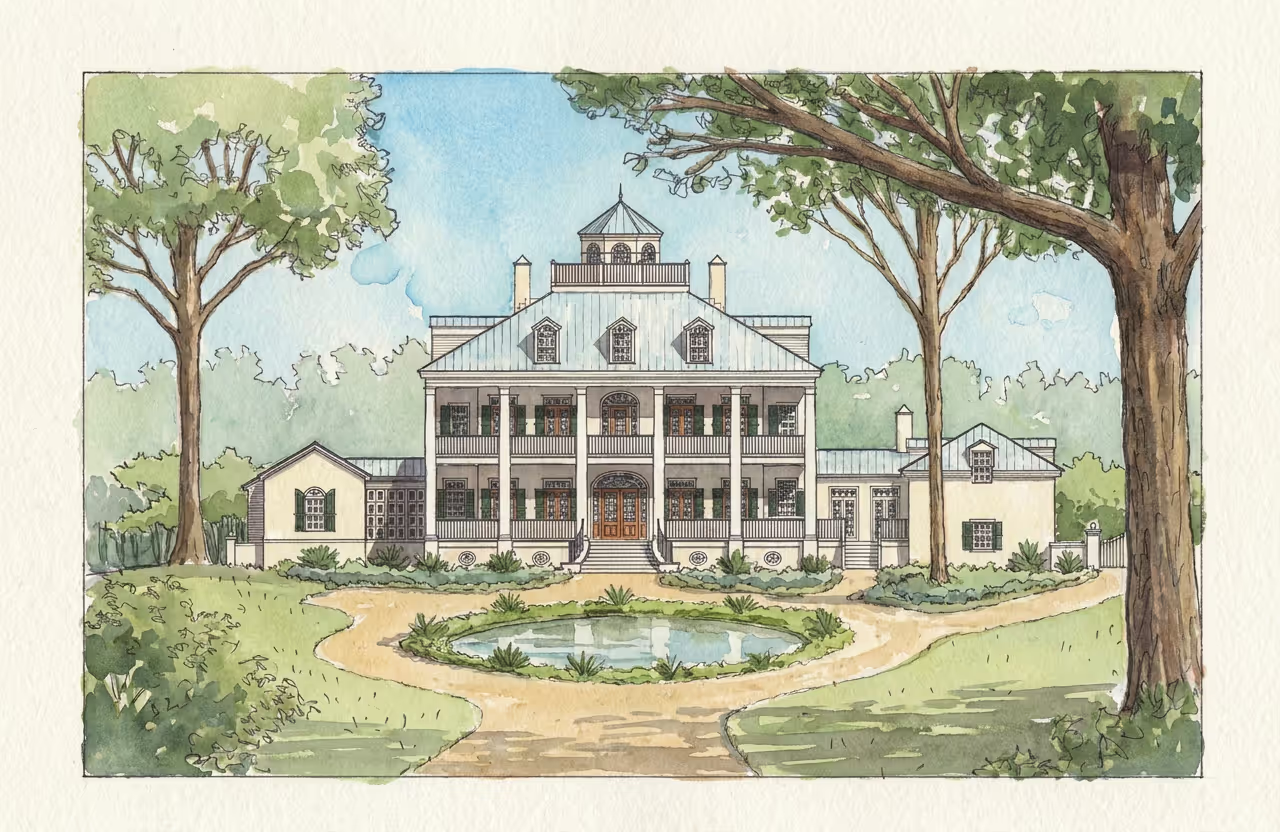
<li><strong>Prominent Portico:</strong> Entry porches with Doric or Ionic columns, sometimes extending the full height of the building.</li>
<li><strong>Heavy Cornice and Entablature:</strong> Deep moldings and horizontal bands emphasize the roofline.</li>
<li><strong>Front Door with Sidelights and Transom:</strong> Wide doors are flanked by narrow windows and topped with a rectangular or semi-circular transom.</li>
<li><strong>Six-over-Six Windows:</strong> Double-hung sash windows, often with shutters.</li>
<li><strong>Low-Pitched Roof:</strong> Gently sloping, sometimes nearly flat.</li>
<li><strong>White or Light Exterior:</strong> Homes are frequently painted white to mimic marble, the preferred material of ancient Greece.</li>
</ul>
<h2>Unique Construction Methods</h2>
<p>While Greek temples were built of stone, American Greek Revival homes often used wood, brick, or stucco. Builders painted wooden columns and trim white to resemble marble. Local materials were adapted to achieve the classical look, making the style practical and affordable for a wide range of homeowners.</p>
<h2>Notable Examples</h2>
<ul>
<li><strong>Second Bank of the United States</strong> (Philadelphia, PA): A landmark civic building with a grand portico and Doric columns.</li>
<li><strong>Tennessee State Capitol</strong> (Nashville, TN): Designed by William Strickland, this building is a prime example of Greek Revival applied to government architecture.</li>
<li><strong>Oak Alley Plantation</strong> (Vacherie, LA): A well-known Southern plantation house with a striking colonnaded facade.</li>
<li>Many small-town courthouses, churches, and homes throughout the Eastern and Midwestern U.S. reflect Greek Revival influence.</li>
</ul>
<h2>Revival and Enduring Appeal</h2>
<p>Greek Revival’s popularity faded after the Civil War, but its dignified forms have remained a favorite for historic preservation and new builds that draw on classical motifs. Restored Greek Revival homes are prized for their stately appearance and connection to America’s formative years. The style’s influence can still be seen in modern neoclassical architecture and civic design.</p>
<h2>Interesting Facts</h2>
<ul>
<li>Builders often used wood painted white to mimic the look of marble, making the style accessible even in areas without stone quarries.</li>
<li>The style’s association with democracy and civic pride made it especially popular for courthouses, banks, and schools.</li>
<li>Some Greek Revival homes feature decorative door surrounds with pilasters and elaborate entablatures, adding to their temple-like appearance.</li>
</ul>
<h2>Summary</h2>
<p>Greek Revival architecture stands out for its classical inspiration, practical adaptation, and enduring sense of dignity. By channeling the spirit of ancient Greece, Americans built homes and civic buildings that reflected their hopes for democracy, beauty, and permanence.</p>
How Our Plans Are Organized
Our plans are organized first by a Main Category (American, British, French, etc), and secondly by a Sub Style (Cape Code, Acadian, Low Country, etc).
You may use the filter tools on the Plan Search Page to narrow down your selections based on your preferred home style. Take note, that most plans can have their exterior elevations modified to a style of your choosing.