<h2>Gothic Revival’s Journey Across America</h2><h2>Overview</h2>
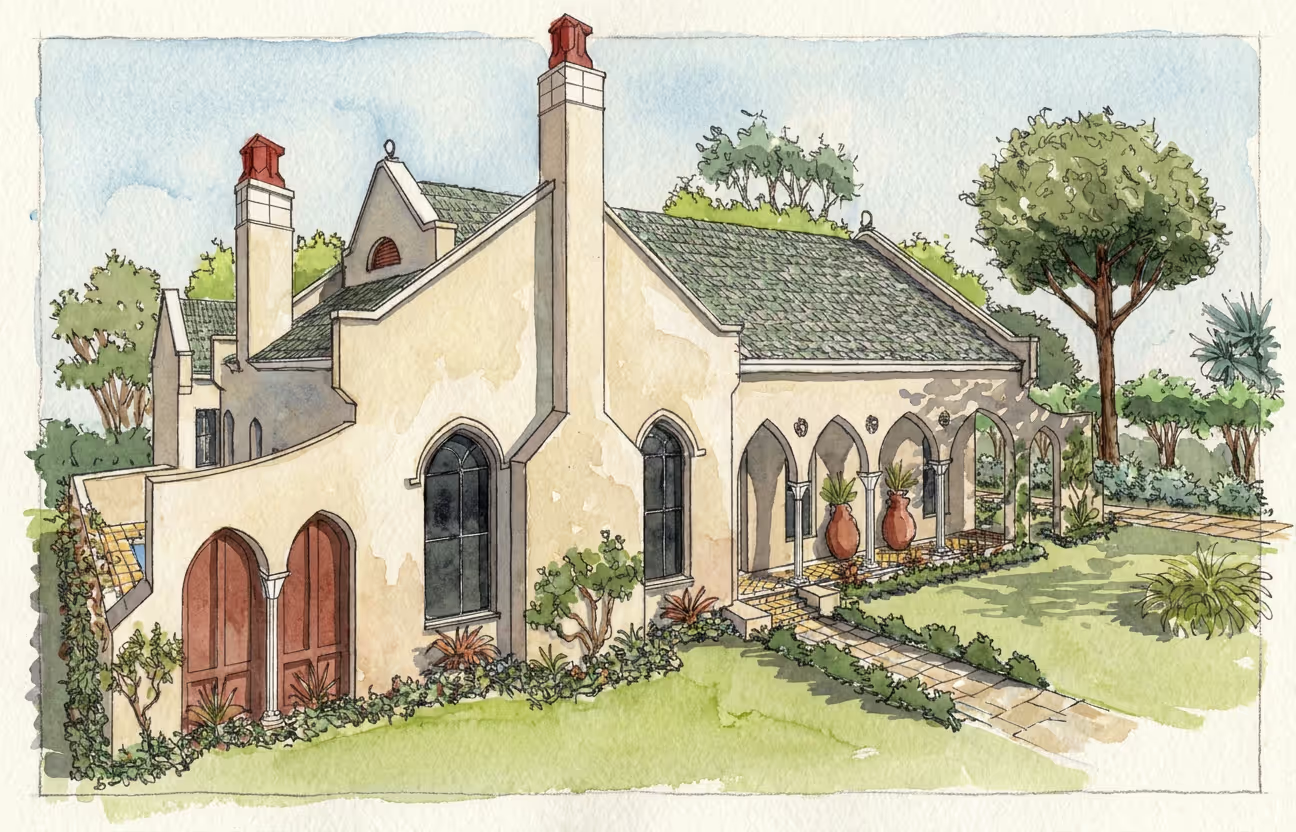
<p>Gothic Revival is a 19th-century style that introduced the drama and detail of medieval European churches and castles to American homes. Recognized for its pointed arches, steeply pitched roofs, and ornate woodwork, this style offered a picturesque alternative to classical designs. Gothic Revival homes often feature decorative bargeboards, pinnacles, and lancet windows, creating a romantic, storybook appearance.</p><h2>History</h2>
<p>The Gothic Revival movement began in Britain in the late 18th century and gained momentum in the United States during the mid-1800s. It was fueled by the Romantic movement’s fascination with history, nature, and the sublime. Pattern books by Alexander Jackson Davis and Andrew Jackson Downing made the style accessible to a wide audience. While early examples were grand estates, the style soon inspired more modest homes, including the distinctive Carpenter Gothic cottages found in rural America.</p><h2>Defining Features</h2>
<ul>
<li><strong>Steeply pitched roofs:</strong> Rooflines are dramatic and often feature cross gables.</li>
<li><strong>Pointed arch windows and doors:</strong> These arches echo the look of medieval cathedrals.</li>
<li><strong>Decorative bargeboards (vergeboards):</strong> Ornate wood trim along the roof edges adds visual interest.</li>
<li><strong>Asymmetrical floor plans:</strong> Many Gothic Revival homes have irregular layouts, towers, or bay windows.</li>
<li><strong>Vertical emphasis:</strong> Tall windows, steep roofs, and finials draw the eye upward.</li>
<li><strong>Tracery and lancet windows:</strong> Delicate wood or stone patterns in windows are common, especially in churches and larger homes.</li>
</ul><h2>Unique Construction Methods</h2>
<p>In America, Gothic Revival homes were often built with wood, leading to the development of Carpenter Gothic, where carpenters used scroll saws to create intricate wooden trim mimicking stone tracery. Pattern books provided detailed plans and templates, making it easier for builders to replicate the style’s signature features. Larger urban examples sometimes used brick or stone and included more elaborate stained glass and masonry details.</p><h2>Notable Examples</h2>
<ul>
<li><strong>Lyndhurst Mansion (Tarrytown, NY):</strong> Designed by A. J. Davis, this estate is a classic example of American Gothic Revival, with turrets, pointed arches, and elaborate woodwork.</li>
<li><strong>Carpenter Gothic Cottages:</strong> Found throughout rural America, these homes feature lacy wooden trim and steep gables, often painted in light colors to highlight their details.</li>
<li><strong>Trinity Church (New York City):</strong> An iconic urban example, showcasing the style’s vertical lines and pointed arches in stone.</li>
</ul><h2>Revival and Enduring Appeal</h2>
<p>Gothic Revival's popularity peaked in the mid-19th century, leaving a lasting impact on American architecture. The style continues to influence campus buildings and churches, and while less common, it is also seen in the residential setting, particularly in luxury homes.. Its romantic, picturesque qualities continue to inspire restorations and new homes that seek to capture its unique character.</p><h2>Interesting Facts</h2>
<ul>
<li>Pattern books by A. J. Davis and A. J. Downing made Gothic Revival accessible to everyday builders and homeowners.</li>
<li>The ornate wood trim on Carpenter Gothic homes is often called “gingerbread.”</li>
<li>Gothic Revival was part of a broader movement that emphasized harmony with nature and dramatic settings, including landscape design.</li>
</ul><h2>Summary</h2>
<p>Gothic Revival brought medieval romance and craftsmanship to American neighborhoods. With its pointed arches, steep roofs, and ornate details, the style stands out for its blend of history, artistry, and practical adaptation. Today, Gothic Revival homes and buildings remain prized for their storybook charm and enduring visual impact.</p>
How Our Plans Are Organized
Our plans are organized first by a Main Category (American, British, French, etc), and secondly by a Sub Style (Cape Code, Acadian, Low Country, etc).
You may use the filter tools on the Plan Search Page to narrow down your selections based on your preferred home style. Take note, that most plans can have their exterior elevations modified to a style of your choosing.