<h2>The Acadian House Style: Heritage, Ingenuity, and Home</h2><p>Acadian homes reflect a blend of French tradition, local adaptation, and practical design. Originating with French settlers—Acadians—who were expelled from Nova Scotia in the mid-1700s and resettled in southern Louisiana, this style is rooted in resilience and community. Today, Acadian architecture stands as a testament to adaptation, craftsmanship, and cultural pride.</p><h2>History of the Acadian House Style</h2>
<p>The Acadian settlement began in 1604, with early homes influenced by French building traditions and adapted to the Gulf Coast’s climate. After the deportation of the Acadians (1755–1763), settlers in Louisiana needed homes that could withstand the region’s heat, humidity, and frequent flooding. They used local materials and techniques, notably cypress wood for its durability and resistance to decay and insects. Over time, American and English influences appeared, but the core Acadian features persisted.</p><h2>Defining Features</h2>
<ul>
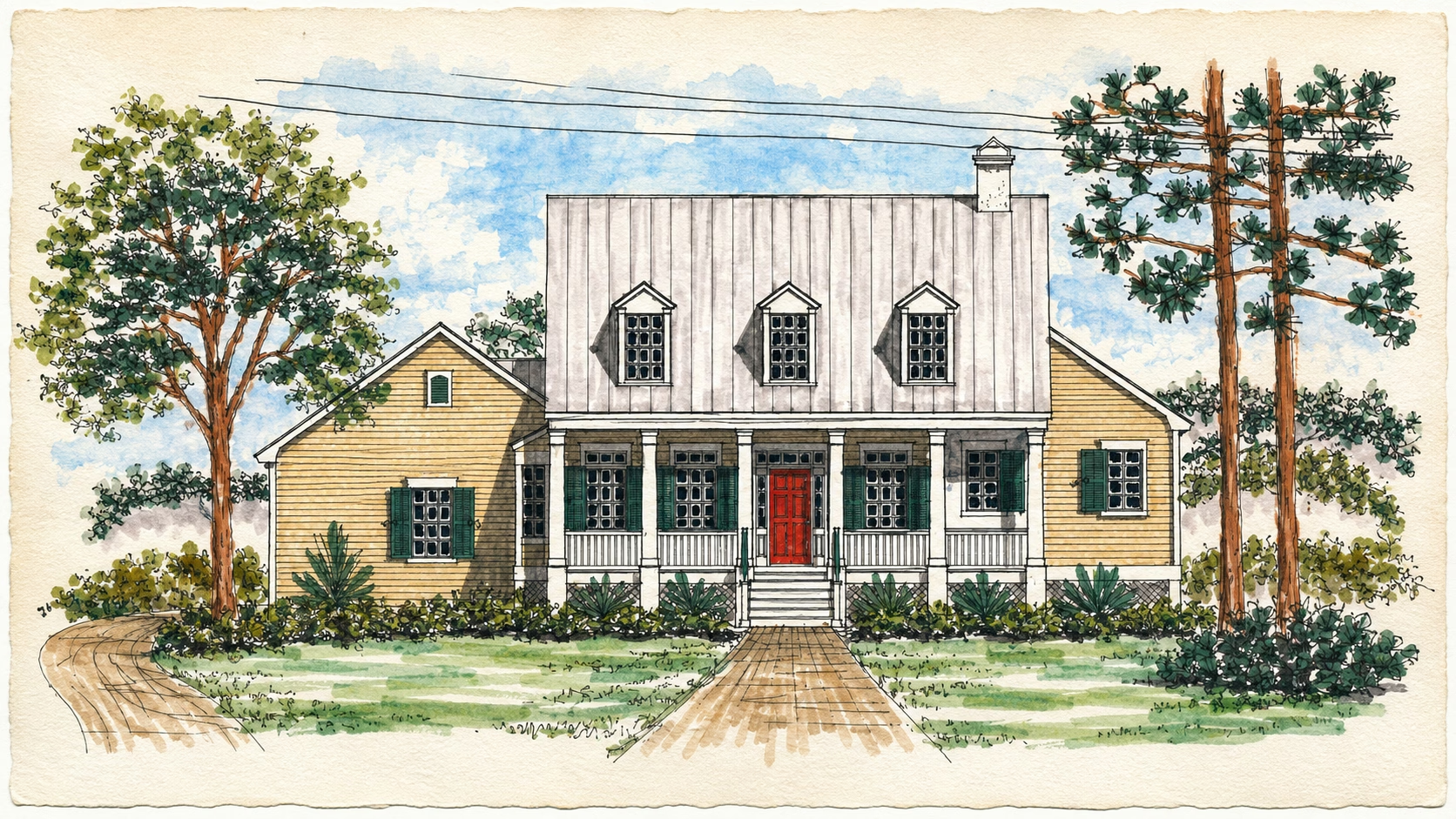
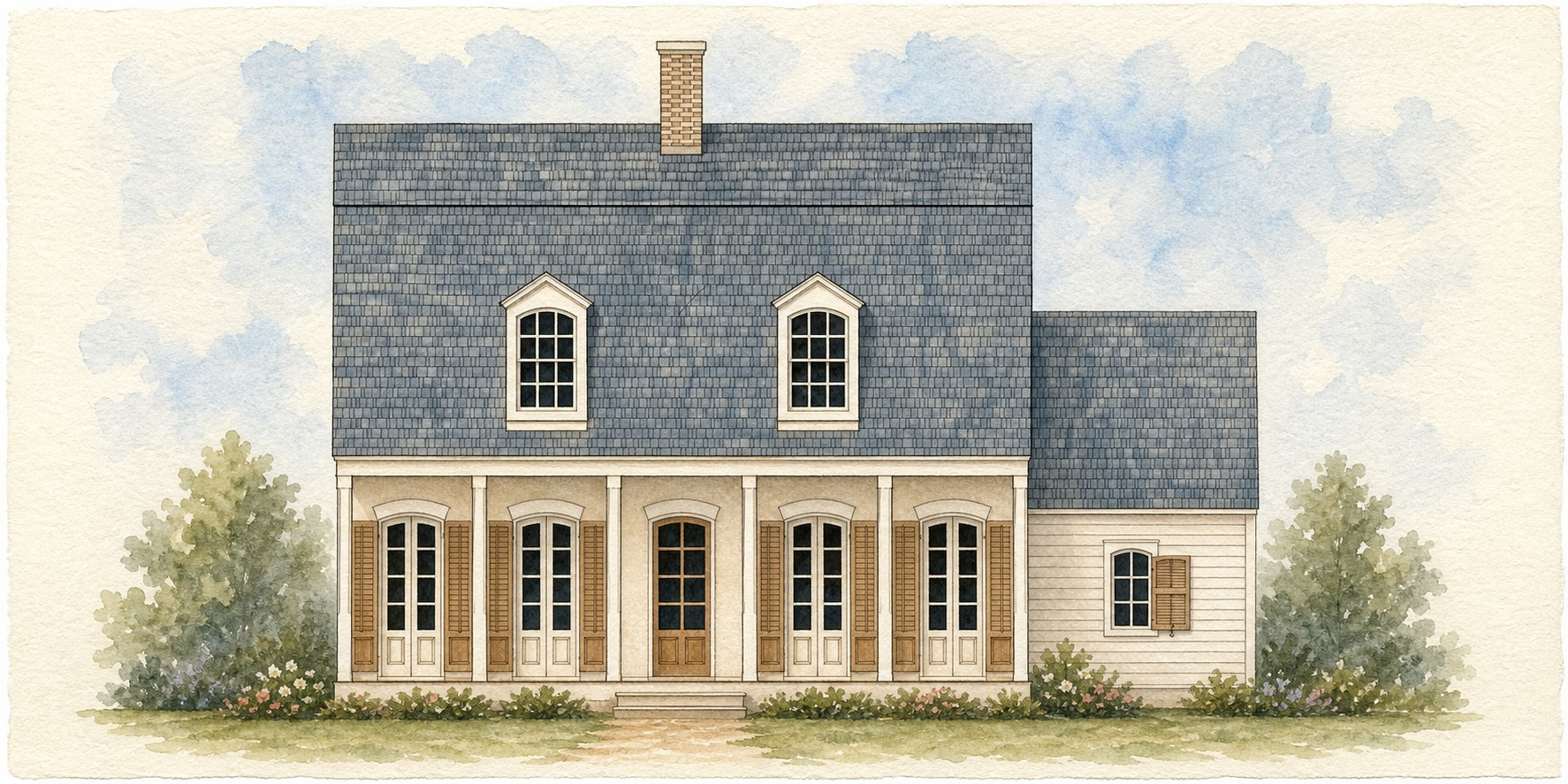
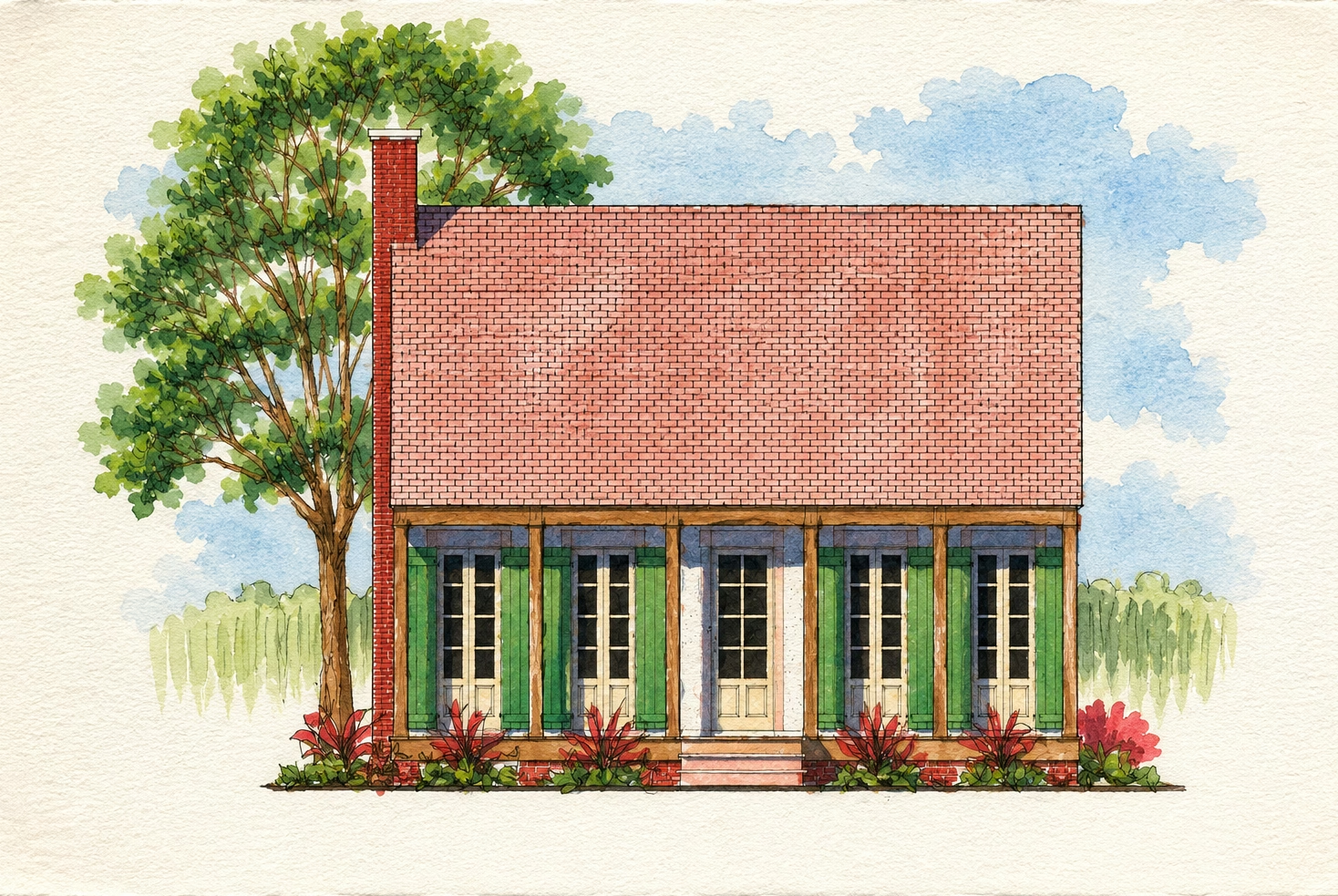
<li><strong>Steeply pitched gable or hipped roofs with gables</strong>; designed to shed rain and keep interiors cool.</li>
<li><strong>One-story or story-and-a-half layouts</strong>; practical and easy to maintain, often with dormers for extra space.</li>
<li><strong>Brick or stone exteriors</strong>; while early homes were mostly wooden, modern Acadian homes often use brick or stone to evoke European manors.</li>
<li><strong>Covered porches (galleries)</strong>; provide shade, catch breezes, and foster neighborly connections.</li>
<li><strong>Tall windows with shutters</strong>; offer beauty and protection from storms.</li>
<li><strong>Asymmetrical designs</strong>; differing rooflines and layouts are common.</li>
</ul><h2>Unique Construction Methods</h2>
<ul>
<li><strong>Pièce sur pièce</strong>; horizontal layers of squared logs or planks set piece on piece, often with tenons inserted into vertical grooves at corners and doorways.</li>
<li><strong>Bousillage</strong>; in Louisiana, a mixture of mud and Spanish moss coated with lime plaster was used to fill timber frames, providing insulation and strength.</li>
<li><strong>Raised foundations</strong>; homes were built on piers to protect from flooding and improve air circulation.</li>
<li><strong>Use of cypress wood</strong>; prized for its resistance to decay and insects.</li>
</ul><h2>Notable Examples</h2>
<ul>
<li><strong>Jean-Baptiste Daigle House</strong>; built around 1840 in Fort Kent, Maine, this house is a rare surviving example of Acadian log construction using the pièce sur pièce method.</li>
<li><strong>Acadian Village in Lafayette, Louisiana</strong>; a cultural park featuring restored 19th-century Acadian homes, showcasing traditional building techniques and features.</li>
</ul><h2>Revival and Modern Appeal</h2>
<p>In the mid-20th century, architect A. Hays Town reinterpreted the Acadian home for southern Louisiana’s climate. He introduced large roof overhangs, breezeways, and cross ventilation, blending traditional Acadian elements with modern design. Today, Acadian homes are especially popular for custom builds that combine French elegance with Southern hospitality. The style remains practical, right-sized for families, and suited to the climate.</p><h2>Fun and Interesting Facts</h2>
<ul>
<li>Early Acadian houses often featured a central fireplace, serving as the heart of the home.</li>
<li>Some homes included a "garçonnière," a loft above the main house used for male children.</li>
<li>The use of bousillage and cypress wood highlights the resourcefulness of Acadian builders.</li>
<li>Raised cottages with deep porches on all sides were adapted for the subtropical Louisiana climate, improving air flow and flood protection.</li>
</ul><h2>Summary</h2>
<p>Acadian architecture blends French, Indigenous, and local influences to create homes that are durable, comfortable, and welcoming. With their steep roofs, shaded porches, and practical layouts, Acadian homes continue to offer timeless appeal and a strong sense of place for families and communities.</p>
How Our Plans Are Organized
Our plans are organized first by a Main Category (American, British, French, etc), and secondly by a Sub Style (Cape Code, Acadian, Low Country, etc).
You may use the filter tools on the Plan Search Page to narrow down your selections based on your preferred home style. Take note, that most plans can have their exterior elevations modified to a style of your choosing.